Introduction
If you’re planning to build a fence, you’re probably choosing between two materials: wood or vinyl. At first glance, wood looks natural and affordable. Vinyl looks clean and modern but sometimes costs more upfront.
What most homeowners don’t realize is that the real difference between these fences doesn’t show up in year one – it shows up in year five, eight, and twelve, after Canadian weather, moisture, frost, and time have done their work. This guide breaks down the real long-term differences in lifespan, maintenance, stability, and cost so you can make a decision you won’t regret later.
1: Appearance over time
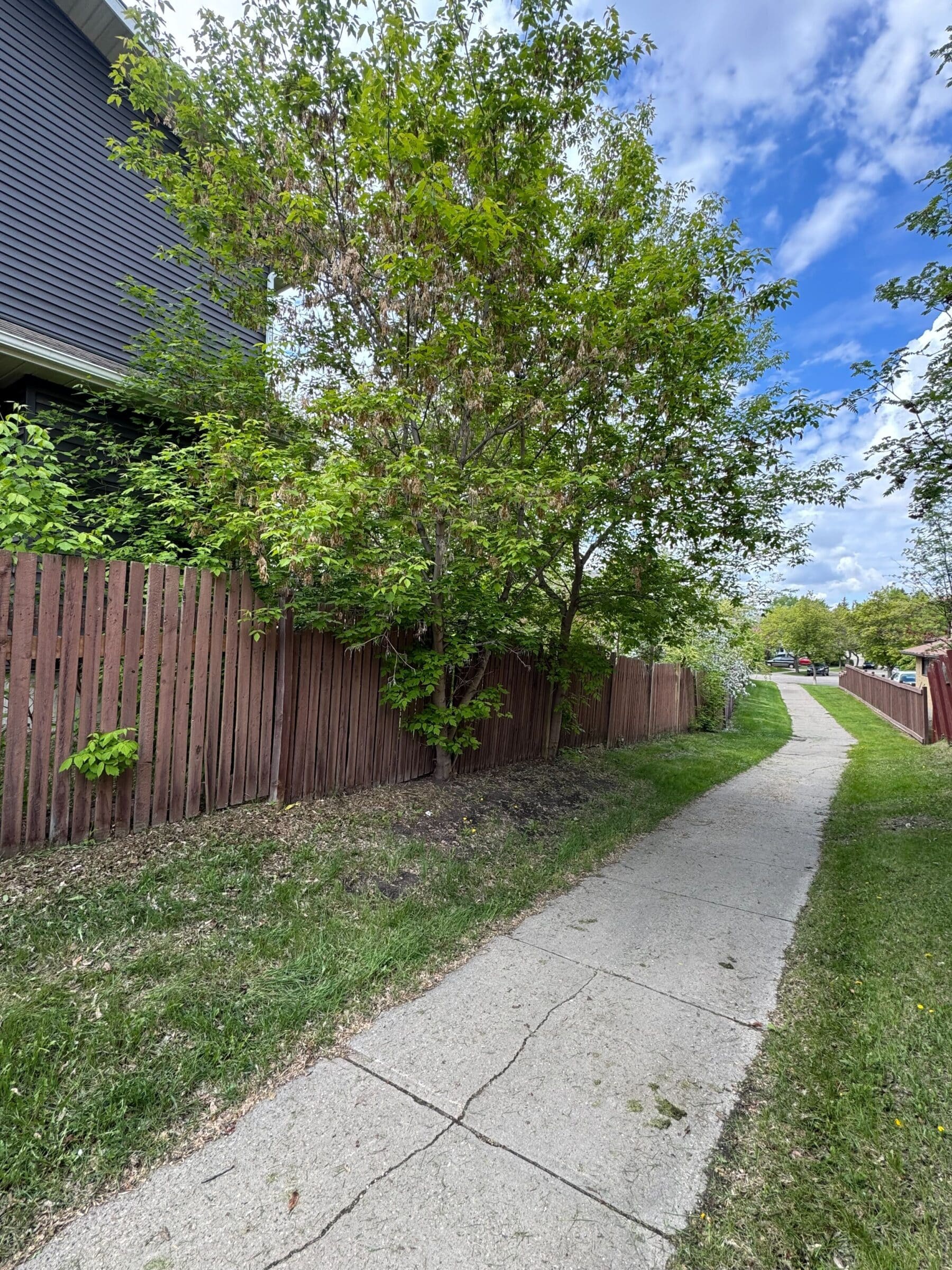
Wood looks great when it’s new. Within 1–2 years, sun exposure, moisture, and temperature swings begin to change it. Boards warp, twist, crack, and discolor. Shaded areas grow algae and mold. To keep it looking good, it must be cleaned, stained, or sealed regularly.
Vinyl looks the same in year ten as it did in year one. It does not absorb moisture, does not discolor, and never needs staining. Cleaning usually means a quick rinse with a hose.
What this means: Wood requires ongoing work to maintain appearance. Vinyl does not.
The ground line is the most important part of any fence. It’s also where most failures begin.
2: What Happens at the Ground Line (Where Most Fences Fail)
The ground line is the most important part of any fence. It’s also where most failures begin.
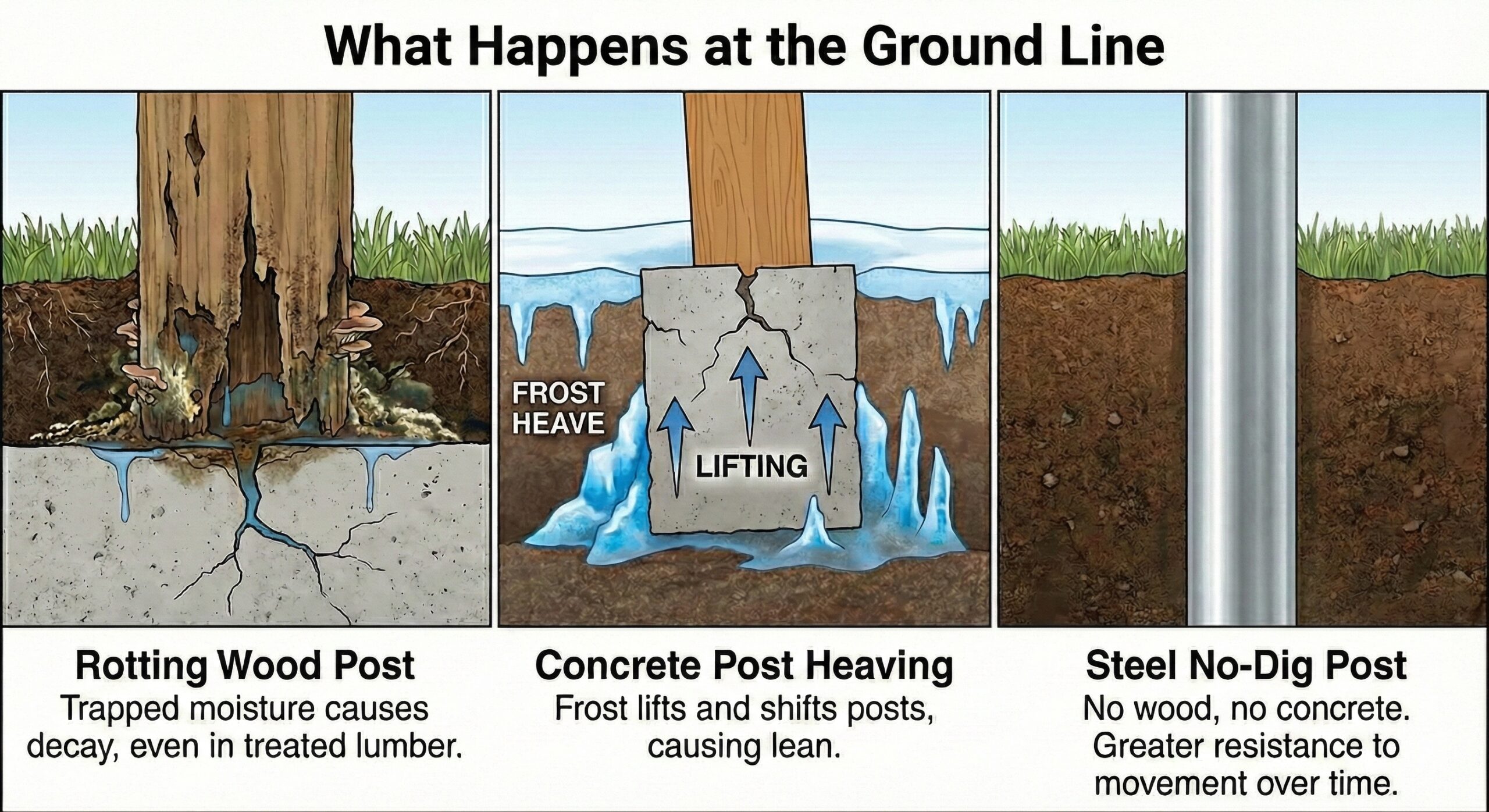
Wood posts sit in soil and moisture year-round. Over time, they rot at the ground line – even the best pressure-treated lumber. Concrete footings don’t prevent this, they often trap moisture against the post. In cold climates, frost heave lifts and shifts posts each winter. This is why many older fences lean. Modern steel no-dig post systems avoid both problems:
- No wood in soil
- No concrete to heave
- Greater resistance to movement over time
What this means: The post system matters more than the fence boards.
3: Typical Lifespan
| Feature | Wood Fence | Vinyl Fence |
|---|---|---|
| Expected lifespan | 8–15 years | 25–40+ years |
| Vulnerable to rot | Yes | No |
| Vulnerable to insects | Yes | No |
| Affected by moisture | Yes | No |
| Requires refinishing | Regularly | Never |
Wood fences don’t usually fail all at once. They slowly deteriorate until sections need replacing. Many homeowners end up rebuilding portions within 10–12 years.
Vinyl fences are designed for decades of service with minimal change.
4: Maintenance Requirements
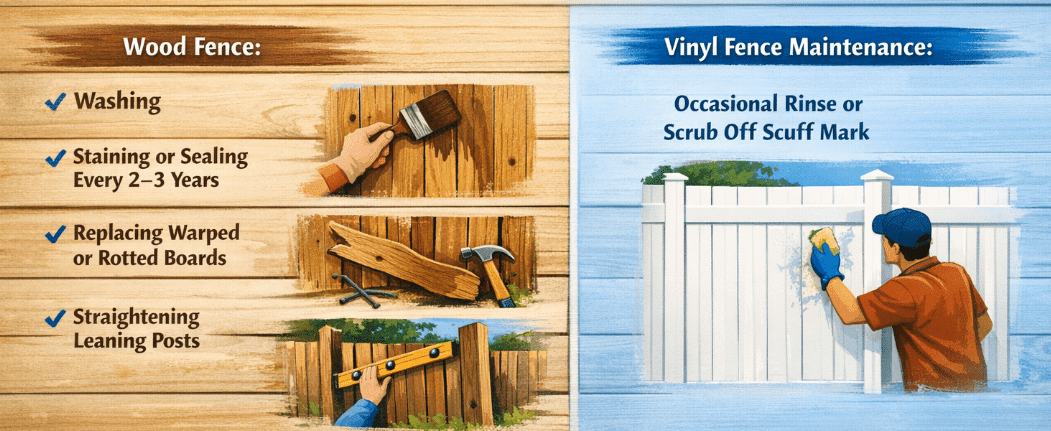
Wood fence maintenance over 10 years often includes:
- Washing
- Staining or sealing every 2–3 years
- Replacing warped or rotted boards
- Straightening leaning posts
Vinyl fence maintenance boils down to – Occasional rinse with water or scrub off a scuff mark
What this means: Wood costs less upfront but more in time, effort, and upkeep.
5: Performance in Canadian Winters
Freeze–thaw cycles are brutal on fences. Soil expands as it freezes, then settles unevenly as it thaws, and this can happen dozens of times each winter.Wood posts set in concrete are especially vulnerable because the concrete acts like a large plug that frost can grab onto and lift. Over several winters, these small movements add up and create the classic leaning fence line.
Vinyl panels combined with steel post systems resist these forces far better as there’s no wide concrete footing for frost to push against, and the more narrow steel post stays tightly integrated with the surrounding soil. The result is a fence that maintains straighter lines year after year.
Summary
Wood fences look great at first but demand ongoing work and eventually deteriorate at the ground line. Vinyl fences cost more upfront but avoid nearly all the common failure points that plague wood fencing in Canadian climates.
For homeowners thinking long term, vinyl is often the more economical and lower-stress choice.